Arc 3 Communications

  • Home
  • About Us
    • Our Founder
    • Our Approach
    • Our Values
  • Services
    • Content
    • Digital
    • Advocacy
  • Our Work
    • Content
    • Digital
    • Advocacy
  • Blog
    • Archive Page
  • Contact Us

This Week in Digital and Public Affairs – Hillary’s Logo, Online Video Ads and LinkedIn

April 17, 2015 By Patrick L. Burns Leave a Comment

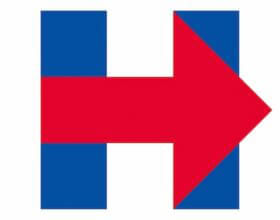
hillary-clinton-logo-1Digital and social media are changing how government institutions, political campaigns and trade associations communicate and achieve their goals. Below is a roundup of the more interesting stories that we read over the last week:

Content, Digital and Social Media

ZDNet reports that LinkedIn bought Lynda.com for $1.5 billion. LinkedIn’s purchase of the twenty-year-old subscription-based online learning portal is a clear sign of the professional social network’s intention to provide training opportunities for specific career skill sets to its members.

In Forbes, contributor Robert Hof provides a thoughtful analysis of the rise of online video in digital advertising. Hof points out  that TV-like online video ads are driving much of the growth in the ad industry. Hof forecasts that the video ads will make our smartphones more resemble our televisions.

Gov 2.0 and Public Affairs

Ernie Smith, the social media journalist for Associations Now asks the question of whether associations should care about the live-streaming video app Meerkat. Smith points out that Meerkat’s ease of use for live-streaming video makes it a valuable tool for capturing key moments at association conferences.

On DigitalGov, Sara Smith, the Social Media Strategist for the National Institute on Drug Abuse, provides her agency as a case study for the benefits of having social sharing buttons on your government website. Smith notes that NIDA’s addition of sharing toolbars to their website has resulted in a rapid increase in social shares and social media referrals to the site. The agency website is now averaging 20k social shares a month in 2015.

Campaigns and Elections 

Western Journalism and Mashable  report how Hillary Clinton’s  presidential campaign logo quickly became fodder for critics on social media. Clinton’s political critics, dismayed supporters and graphic designer aficionados panned the logo as amateurish and unprofessional.

These were some of Arc 3’s most interesting reads in digital and public affairs over the last week. What were your favorite stories? Let us know if there is a neat story that we missed! We’d love to hear from you.


Filed Under: Business Advocacy, Campaign Management, Campaigns and Elections, Civic Innovation/Gov. 2.0, Content Marketing, Government, Public Affairs, Social Media Relations Tagged With: Digital and Campaigns and Elections, Digital and Government, Digital and Public Affairs, Digital and Trade Associations, Elections 2016, Hillary Clinton 2016, LinkedIn, Meerkat, Online Video Ads, Social Media and Campaigns and Elections, Social Media and Election 2016, Social Media and Government, Social Media and Public Affairs, Social Media and Trade Associations

Arc 3 Conducts Content Marketing and Social Media Education Programs for Chamber of Commerce Executives

November 22, 2014 By Patrick L. Burns Leave a Comment

Arc 3 Communications recently conducted content marketing and social media continuing education programs for the Georgia Association of Chamber of Commerce Executives (GACCE) as a part of their fall regional road shows. The programs were attended by hundreds of chamber of commerce executives from across the state of Georgia. The regional road shows were hosted by the Dublin-Laurens County Chamber of Commerce in Dublin; the Albany Area Chamber of Commerce in Albany; and the Cherokee County Chamber of Commerce in Canton.

Arc 3 Founder Patrick Burns provided insights on what is content marketing and why it is important for a local chamber of commerce’s communications efforts. Participants were provided insights into how to incorporate a content marketing process inside their chamber of commerce and the fundamental elements for developing a content marketing plan for their organization.

The Arc 3 Communications team also provided an overview of the major social media platforms in the categories of social networking and micro-blogging. Sessions on how a local chamber of commerce can utilize Facebook, LinkedIn, Google+, and Twitter for member engagement and other organizational goals were provided. The Arc 3 team also shared tips for creating a social media policy and utilizing social media management and measurement tools.

The continuing education sessions on content marketing and social media stimulated conversation from among the local chamber of commerce executive attendees on the types of content and tactics that were engaging members and helping them to achieve their chamber’s goals in promoting events, economic development and policy initiatives, and tourism programs.

Arc 3’s  content marketing and social media training seminars are geared towards those in trade associations, public affairs and government and have been very valuable to communications professionals in the civic arena. Content marketing and social media are changing everyday with new platform updates, tools, shifting audiences and techniques. Through our research, lab work and networking we keep up with the latest trends in content marketing and social media in the civic space.

Want to talk about customized content marketing and social media training for your organization? Please contact Patrick Burns at pburns@arc3communications.com.


Filed Under: Business Advocacy, Content Marketing, Social Media Relations Tagged With: Contact Marketing and Chambers of Commerce, Content Marketing, Content Marketing and Georgia Association of Chamber of Commerce Executives, Content Marketing Training, social media, Social Media and Chambers of Commerce, Social Media and Georgia Association of Chamber of Commerce Executives, Social Media Training

Arc 3 Communications’ Monthly Top News Reads in Digital, Social and Public Affairs – December 2013

December 19, 2013 By Patrick L. Burns Leave a Comment

Digital and social media are changing how government institutions, political campaigns and trade associations communicate and achieve their goals. Below is a roundup of the more interesting stories that we have read over the last month:

Digital and Social Media

Inc. asserts that SEO is dead due to recent Google algorithm changes and offers suggestions for what is taking its place.

TechCrunch reports on Google’s testing of  paid +post ads for Google+ content with launch partners Toyota And Cadbury.

The Wall Street Journal looks inside a Twitter robot factory, and how fake activity influences trending topics.

Gov 2.0 and Public Affairs

DigitalGov analyzes Facebook’s News Feed Algorithm update and what agency social media managers need to know about the change that is designed to produce more high quality news content.

In GovLoop, Dannielle Blumenthal, Director of Digital Engagement for the National Archives and Records Administration, offers her top 10 principles for Federal digital engagement in FY2014.

On U.S. Navy Media Blog, Sandy Gall, a member of the Navy’s emerging media team and a part of the Navy’s response on Twitter, shares what the team learned from its crisis communication during the Washington Navy Yard Shooting.

Campaigns and Elections

Twitter announces the top tweets in government and politics in their “#YearOnTwitter” review for 2013.

The Guardian offers five ways political parties can engage more people in policymaking.

TechPresident reports on the demise of the non-partisan political social network Ruck.us founded by Nathan Daschle.

These were some of Arc 3’s most interesting reads in digital and social and public affairs over the last month. What were your favorite stories? Let us know. We’d love to hear from you.

Filed Under: Business Advocacy, Campaign Management, Campaigns and Elections, Civic Innovation/Gov. 2.0, Data Analysis, Digital Marketing, Government, Public Affairs, Social Media Audits and Listening analyses, Social Media Relations, Uncategorized Tagged With: Facebook, Google Plus, National Archives and Records Administration, Political Social Networks, Ruck.us, SEO, Social Media and Campaigns, Social Media and Policymaking, Social Media and Politics, Twitter, U.S. Navy

Merry Christmas and Happy New Year from Arc 3 Communications

December 19, 2013 By Patrick L. Burns Leave a Comment

Thank you to our clients, friends and colleagues who have helped to make Arc 3’s 2nd year a great success. We set out to do ambitious and interesting work in 2013, and our clients have entrusted us to do just that.

Over the last year, we have done innovative work in the area of content marketing, digital and social media for clients in the political, public affairs and government space. It has been our passion to help trade associations, right-center campaigns and local and state governments evolve their communications and marketing strategies to fit the digital age.

Content and measurable data are both important to us. Arc 3 has helped clients to develop and implement effective strategies and campaigns that help them to achieve their organizational goals in a complex media and public affairs landscape. Content marketing and digital and social media only work if they help an organization to reach those real world objectives that result in a return on their investment.

The golden age of mass media communications through print, television and radio has begun to fade, and a new multi-platform and digital age has begun. The digital age has resulted in new ways in which people – especially millenials – are processing issue and policy information.

Over the last several years, businesses have been going through a transition from traditional marketing to content marketing out of necessity in order to reach consumers. Our civic institutions, campaigns and trade associations will have to change as well in order to sustain their key roles in the public square.

As our agency grows and evolves in the dynamic landscape in media and public affairs, we look forward to another year of fun, interesting and purposeful work.

Merry Christmas and Happy New Year!

Patrick L. Burns, Founder and President, Arc 3 Communications


Filed Under: Business Advocacy, Campaign Management, Campaigns and Elections, Civic Innovation/Gov. 2.0, Coalition Building, Digital Marketing, Government, Grassroots Mobilization, Message Development, News, Our Work, Public Affairs, Social Media Audits and Listening analyses, Social Media Relations, Uncategorized, Website Development Tagged With: Content Marketing, Content Marketing and Campaigns, Content Marketing and Gov 2.0, Content Marketing and Trade Associations, Digital Media and Campaigns, Digital Media and Public Affairs, Digital Media and Trade Associations, Gov 2.0, Social Data, social media, Social Media and Campaigns, Social Media and Gov 2.0, Social Media and Trade Associations

Arc 3 Communications’ Monthly Top News Reads in Digital, Social and Public Affairs – November 2013

November 21, 2013 By Patrick L. Burns Leave a Comment

Digital and social media are changing how government institutions, political campaigns and trade associations communicate and achieve their goals. Below is a roundup of the more interesting stories that we have read over the last month:

Digital and Social Media

Business Insider provides an analysis of social media demographics and the surprising identity of each major social network.

Gigaom reports on Google’s new ad policy and how to avoid appearing in Google ads.

Alan Mutter of Reflections of a Newsosaur , asks the question “Are newspapers losing their mass media mojo?”

Gov 2.0 and Public Affairs

Nextgov reports how thwarted users vent about the Obamacare website on Facebook.

The Atlantic Magazine reports how the City of Chattanooga, Tennessee developed its own font “Chatype” through a Kickstarter campaign.

Nextgov reports how Congress.gov replaces Thomas.gov as the source for legislative bills and committee information on Capitol Hill.

Campaigns and Elections

Advertising Age examines how data is redefining political TV ads.

TechPresident analyzes the role of digital and big data in election 2013.

Politico reports how Twitter is a mixed blessing for political flacks.

In a Foxnews.com  opinion piece, John Jordan, a member of the Hoover Institution’s Board of Overseers at Stanford University, offers a donor’s guide to making your money count in politics.

These were some of Arc 3’s most interesting reads in digital and social and public affairs over the last month. What were your favorite stories? Let us know if there is a neat story that we missed! We’d love to hear from you.


Filed Under: Business Advocacy, Campaign Management, Campaigns and Elections, Civic Innovation/Gov. 2.0, Data Analysis, Digital Marketing, Government, Public Affairs, Search Engine Optimization and Search Engine Marketing, Social Media Audits and Listening analyses, Social Media Relations, Uncategorized, Website Development Tagged With: Big Data, Digital Media and Politics, Digital Media and Public Affairs, Election 2013, Facebook, Google Ads, Political Marketing, Social Media and Politics, Social Media and Public Affairs, Twitter

Are Governors or College Football Coaches More Social Media Savvy?

September 28, 2013 By Patrick L. Burns Leave a Comment

In the Southeast, college football is venerated and beloved. The head coaches of the football programs of a state’s flagship institutions are arguably the most influential people in a state. In 7 of the 10 Southeastern states, the highest paid public employee is the football coach at a public university.

The head football coach at a Southeastern public university has a very high profile. The coach is either praised or vilified depending on the outcome of a Saturday game. Successful football coaches in the South have enormous political capital that could translate to public office. However, many such as former UGA head football coach Vince Dooley, who considered a bid for U.S. Senate in 1986, decline to pursue a career in politics.

In today’s age of ESPN and round the clock media coverage of Southeastern football, many across the country can name a Southeastern state’s football coach, while not knowing the state’s Governor. For example, Nick Saban, the head football coach at the University of Alabama has high name recognition across the nation. Yet, how many can name the State of Alabama’s, current Governor, Robert Bentley?

However, in today’s new media environment, social media can level the playing field. Does the notoriety, celebrity and wealth of Southeastern football coaches translate into the social media space? Or are there Governors who are social media savvy enough to outpace the head football coaches in their state? Arc 3 performed an analysis of the Klout Scores and number of Twitter and Facebook followers for 10 Southeastern Governors and the head coaches of the collegiate football programs in their state. Here are a couple of Southeastern Governors whose social media prowess outpaces their football programs:

1. Governor Rick Scott (Klout Score 84): The first term Governor of Florida has over 40k followers on Twitter and 85k likes on Facebook. A successful entrepreneur before becoming Governor, he is credited with reducing the state’s unemployment rate from 11 percent to 7 percent. In the social media sphere he outpaces University of Florida Head Football Coach Bill Muschamp (Klout Score 65), Florida State University Head Football Coach Jimbo Fisher (Klout Score 27) and University of Miami Head Football Coach Al Golden (Klout Score 64). According to PeekAnalytics, Governor Scott has 156 times the social pull on Twitter as the average user. Social pull is a good measure of how influential an account’s audience is compared to the average Twitter user. Governor Scott’s social media prominence will be an asset as he runs for re-election in 2014 in the very competitive state of Florida.

2. Governor Pat McCory (Klout score 69): The recently elected Governor of North Carolina is social media savvy with over 18k followers on Twitter and over 47k likes on Facebook. A former Mayor of Charlotte, the pragmatic Governor has made economic development a focal point of his administration with some notable results. Forbes Magazine recently recognized North Carolina as having the nation’s 4th best business climate. As an excellent marketer for his state, he outpaces socially the head football coaches for both the University of North Carolina, Larry Fedora (Klout Score 62) and North Carolina State University, David Doreen (Klout Score 62). According to PeekAnalytics, on average, each of Governor McCory’s twitter followers has 631 connections across all social media platforms to make for a strong audience reach.

3. Governor Nikki Haley (Klout Score 84): With over 64k Twitter followers and 54k likes on Facebook, Governor Haley is a social media powerhouse. The daughter of Indian immigrants, the Governor was a speaker at the 2012 RNC Convention and is one of her party’s rising stars. The Governor’s social media prowess outpaces her state’s football program accounts, Clemson Football (Klout Score 66) and University of South Carolina Football (Klout Score 68). The head of the football programs for the respective schools, Dabo Swinney of Clemson and Steve Spurrier of South Carolina, have both demurred from Twitter usage, but their chief assistants have taken up the mantle. Governor Haley outpaces these top assistants, Chad Morris (Klout Score 51) and Jeff Scott (Klout Score 58)  of Clemson and Steve Spurrier, Jr. (Klout Score 82) and G.A. Mangus (Klout Score 49) of South Carolina. Running for re-election in 2014, Governor Haley has 200 times the social pull on Twitter as the average user according to PeekAnalytics. In addition, each of Governor Haley’s twitter followers has 1,578 connections across all social media platforms, which makes her audience reach 3.8 times the average twitter user.

The majority of head football coaches in the Southeast outranked their Governors in social media prowess. A head football coach’s success is largely based on his ability to recruit key players, and social media has become an important part of the recruiting process. Today’s players are now the first generation to have been born into the internet age. Social media is a vital way to reach and persuade them. The Governors of the states of Florida, North Carolina and South Carolina have recognized the power of social to recruit voters and market their states. It is no coincidence that these three Governors are also rising stars in their party. These Governors understand and appreciate the power of social media to build loyalty and create fans in the dynamic new media environment of today.


Filed Under: Business Advocacy, Campaign Management, Campaigns and Elections, Digital Marketing, Government, Grassroots Mobilization, Public Affairs, Social Media Audits and Listening analyses, Social Media Relations, Uncategorized Tagged With: Al Golden, Bill Muschamp, Chad Morris, Clemson Football, College Football, Dabo Swinney, David Doreen, ESPN, Facebook, Forbes, G.A. Mangus, Governor Nikki Haley, Governor Pat MCory, Governor Rick Scott, Governor Robert Bentley, Jeff Scott, Jimbo Fisher, Jr., Klout, Larry Fedora, Nick Saban, Social Media and College Football, Social Media and Politics, Steve Spurrier, Twitter, USC Football, Vince Dooley

What You Need to Know about Dig South and the Southeastern Knowledge Economy

April 25, 2013 By Patrick L. Burns Leave a Comment

Arc 3 Communications recently attended the first annual Dig South Interactive Festival in Charleston, SC. The festival was launched to celebrate the Southeastern knowledge economy and show that Austin, Boston and Silicon Valley have nothing on the creativity, innovation and culture of the South. Charleston, with its “Silicon Harbor” community of startups was the perfect place to host this rival festival to Austin’s SXSW.

The Southeastern knowledge economy is clearly an underdog in today’s tech economic development space race, but events like Dig South help to highlight the potential that places like Charleston have in developing technology and creative industry startups. It remains a little known fact, that a lot of startups are created in the Southeast but eventually leave for Silicon Valley for additional funding.  This fact is widely acknowledged by Southeastern economic development leaders, and efforts like Dig South reflect the need to stop this flow of startups to outside of the region.

The assets of the Southeastern knowledge economy were on full display at Dig South. On the first day participants were able to go on a “Studio Strut” of some eleven creative studios in Charleston. Many of these studios lined the city’s fabled King Street, and were full of creative people in graphic design, digital and marketing who loved their companies’ large co-working studios. These creatives were reflective of the South’s long tradition of artistry exemplified by writers such as Flannery O’Connor, Walker Percy and William Faulkner. The culture of the South is unique in places like Charleston, and is a draw for young creatives who essentially can choose to live wherever they like in today’s digital economy.

Like SXSW, Dig South had a strong musical component. Attendees could “Dig In” with some quality bands in country, indie rock and rhythm and blues. Birthplace of both R&B and the Grand Ole Opry, the Southeast’s musical prominence was reflective in the smorgasbord of bands from Danger Muffin to Roscoe Bandana to Lee Fields and the Expressions. For creatives whose work often thrives with the sounds of music, the fullness of the Southeast’s musical culture is a compelling case for living, working and playing here.

The biggest draw for Dig South was of course the interactive conference.  Charleston was clearly a draw for some quality presenters, moderators and panelists. Attendees were treated to a wide range of speakers and panelists including from Facebook, Twitter, CNN.com, HNLtv.com and Contently. The keynote speaker Robert Tercek, Chairman of the Creative Visions Foundation provided an insightful talk about innovation and the future of media.

However, a true testament to the knowledge economy of the South was the quality presenters who were local, such as Steve Parker, founder of Levelwing, the staff of Garden and Gun Magazine, and executives from Blackbaud, PeopleMatter and Benefitfocus. The local presenters exemplified why the Southeast has long been a hub for technology and innovation.  The South is home to a strong aerospace and space industry consisting of Lockheed Martin, Boeing and NASA;  a strong automotive industry with companies like Nissan, BMW, Mercedes, Kia, and Volkswagen; and a cable media industry with powerhouses such as CNN, Turner Broadcasting and The Weather Channel. The South’s history of innovation began with strong public land grant technologically based universities and world renown research facilities such as the Centers for Disease Control, the Research Triangle Park, and the Oak Ridge National Laboratory. For engineers and technologists looking for a place steeped in the modern history of technology and innovation, the South is a natural draw.

The successful Dig South Festival showed that South’s rich culture of creativity, technology and innovation is the springboard for a knowledge economy that will continue to produce and grow many new startups. For those in the creative, tech, media and digital industries, block out next year’s trade show calendar and save the date for Dig South 2014 on April 9th to 13th in Charleston. You will be glad that you did.

Filed Under: Business Advocacy, Digital Marketing, News, Social Media Relations, Uncategorized Tagged With: Benefitfocus, Blackbaud, BMW, Boeing, Centers for Disease Control, Charleston, Contently, Creative Visions Foundation, Danger Muffin, Dig South, Dig South Interactive Festival, Facebook, Flannery O'Connor, Garden and Gun Magazine, HNLTV.com, Lee Fields and the Expressions, Levelwing, Lockheed Martin, Mercedes, Nissan, Oak Ridge National Laboratory, PeopleMatter, Robert Tercek, Roscoe Bandana, SC, Silicon Harbor, SXSW, The Grand Ole Opry, The Research Triangle Park, The Weather Channel, Turner Broadcasting, Twitter, Volkswagen, Walker Percy, William Faulkner

The Effectiveness of Political Social Advertising

March 30, 2013 By Patrick L. Burns Leave a Comment

Political advertising in national and statewide races has historically been dominated by large media buys on television. Of the billions spent on election ads, a small percentage has been spent on social media advertising, but that is about to change. Voters have gone off the grid.

In election 2012, over 40% of likely voters preferred other video sources to live TV, including laptop or PC and streaming devices such as DVD and DVR.  The majority of live TV watching was sports related. The average time spent watching video was still high at almost 20 hours a week, but nearly half of that time was not spent on live TV. Also, nearly half of likely voters owned a smartphone and 32% of likely voters owned a tablet.

We are moving to a new advertising paradigm in politics, and social advertising is a key part of it.  With candidates using Twitter and Facebook to stay connected with voters, keep up on news and contrast themselves with opponents, paid social is a natural fit for politicians. Social advertising is powerful as voters spend on average 10 hours per week on social apps and interest graph targeting helps candidates zero in on key voters. In the time that it takes to create 1 political 30-second spot, 15 paid social campaigns can be launched. These social ads can be created from breaking news and events in real time.

While Tumblr and LinkedIn offer ads, the overwhelming majority of social advertising is on Twitter and Facebook. Both Twitter and Facebook ads have proven to be effective in the area of politics.

Facebook messages have been shown to be an effective tool in get-out-the-vote efforts. In the prestigious journal, Nature, political scientist Dr. James Fowler found that a single get-out-the-vote message could produce a 2.2 % bump in voter turnout. More importantly, 80% of the impact came from friends sharing the message with others. This is the first definitive proof that social networks, as opposed to television or radio, have uniquely powerful political benefits. As Facebook bleeds into older demographics, campaign messages could have a much larger impact than the study found. Another key finding of the study was that candidates need users to voluntarily share the ads and messages with their friends for maximum effectiveness.

Many campaigns initially used basic Facebook Marketplace type ads, with a 25 character title, and a 90 character body, a 100 x 72 pixel image, which are the least ideal message delivery vehicles on Facebook. However a growing number of campaigns have found greater success at using ad units such as “Like” ads and sponsored stories, which encourage both current and potential fans to interact with page content.  Facebook has also recently allowed ads to be placed directly into Newsfeed which has resulted in better results.

Mitt Romney’s campaign for President utilized Facebook mobile ads last election cycle. These ads, which showed up in a Facebook user’s news feed, linked to Governor Romney’s page and indicated which friends were fans of the candidate. Zac Moffatt, digital director of Governor Romney’s campaign, claimed a remarkable click rate of 10% among people who viewed the ads.

Twitter ads have been proven effective to drive get-out-the-vote messages and target voters. Political campaigns are spending on the “promoted tweet,” which looks like a regular Twitter post and which advertisers pay to have show up at the top of a stream of tweets, or to people who might not see the tweet otherwise. Other political Twitter ads that may be placed are for Promoted Accounts and Promoted Trends. Like business ads on Twitter, political ads are clearly labeled as promoted with a purple promoted icon and information about who has purchased the ad. Based on demand from political campaigns, Twitter has allowed advertisers to tailor paid messages to people by state or region.

Wisconsin Governor Scott Walker, who faced Milwaukee’s Mayor Tom Barrett in an historic recall election in 2012, used Twitter political ads successfully. Governor Walker’s campaign utilized Promoted Tweets and Promoted Accounts to drive a get-out-the-vote message to targeted voters and influencers. The Walker campaign’s use of Promoted Tweets drove voters to landing pages with details on the Governor’s stance on key issues and strong calls to action to pledge to vote. A week before the election, Governor Walker’s campaign also used Promoted Accounts to grow followers among targeted influencers who could help spread the campaign message through retweets. Governor Walker’s Promoted Tweets campaign garnered an average engagement rate of 6%. In addition, the Governor increased his followers from 16,600 to over 23,000 with his Promoted Accounts campaign. Overall his Twitter ad campaign reached 946,000 potential voters. Governor Walker’s effective use of social advertising was a key component in mobilizing voters in his defeat of a recall.

The use of social advertising by political campaigns will continue to increase. Social ads are an attractive selling point to campaigns looking for a way to maximize their impact for little cost. However, these ads should only be run as a part of a larger digital strategy that promotes great content such as a video, an image or interactive experience. Great content and socials ads to promote it is a winning combination for candidates  that have a need to get their message out in a cost effective way.


Filed Under: Business Advocacy, Campaign Management, Campaigns and Elections, Coalition Building, Government, Grassroots Mobilization, Social Media Audits and Listening analyses, Social Media Relations, Uncategorized Tagged With: Dr. James Fowler, Election 2012, Facebook, Governor Scott Walker, LinkedIn, Mitt Romney, MittRomney2012, Nature, Tom Barrett, Tumblr, Twitter, Zac Moffatt

The Top Ten Most Social Media Savvy Grassroots Organizations in America

February 28, 2013 By Patrick L. Burns 1 Comment

The recent legislative battle over the SOPA bill between the Motion Picture Association of America and the technology industry highlighted the evolution of tactics in advocating for or against legislation and policies. The Motion Picture Association of America pursued traditional lobbying tactics, while the technology industry mobilized their grassroots supporters via social media and the internet to support the cause of internet freedom. The technology industry’s victory over the Motion Picture Association of America last year showed the effectiveness of grassroots organizations united behind a cause and its anniversary was marked this year as Internet Freedom Day.

Grassroots organizations with their organic nature and individual member support for specific causes stand to grow in influence and benefit from the advent of social media as an advocacy tool. Social media as a platform is most conducive to the passionate and intense nature of grassroots organizations and the causes that they support.

Arc 3 looks at the top ten most social media savvy grassroots organizations. The list was compiled analyzing the Klout Scores and number of Twitter and Facebook followers for the largest and most powerful grassroots organizations in the country.

1. National Rifle Association (Klout Score 89) – Few groups match the  grassroots-powered influence of the NRA, which faces an intense fight with the Obama administration over its push for stronger gun control laws in the wake of the shooting in Newtown, Connecticut. The NRA has a strong social media network to mobilize and inform its members with over 131K followers on Twitter and 105K likes on Facebook.

2. Sierra Club (Klout Score 88) –  The Sierra Club has  spearheaded strong opposition to the proposed Keystone XL oil pipeline with a solid team that includes Dave Hamilton, leader of the group’s “Beyond Coal” campaign, and  Melinda Pierce, a veteran of the fights over Arctic drilling. The Sierra Club is one of most savvy social media grassroots groups with 183K likes on Facebook and over 58K followers on Twitter.

3. FreedomWorks (Klout Score 86) –  Despite the recent departure of its former Chairman Dick Armey and the turmoil that ensued, FreedomWorks continues to exert considerable influence as a grassroots organization advocating for economic freedom. With over 98K followers on Twitter and 4.2 million likes on Facebook, FreedomWorks is a force to be reckoned with in the social media space.

4. Natural Resources Defense Council (Klout Score 86) – With over 1.3 million members and online activists, the NRDC is a strong force in opposition to the proposed Keystone XL oil pipeline. David Hawkins of their group is considered one of the top experts on global warming. With over 81K followers on Twitter and 195K Likes on Facebook, the NRDC is a social media powerhouse.

5. The Wilderness Society (Klout Score 84) – With legislative efforts led by David Moulton, a former top adviser to Rep.  Edward Markey (D-Mass.), the organization is a strong advocate on climate change policy as well as conservation. The Wilderness Society has a solid social media presence with over 21K Followers on Twitter and 34K likes on Facebook.

6. Public Citizen (Klout Score 83) – Co-founded over 40 years ago by Ralph Nader, the group has focused heavily on campaign finance reform and the passage of ethics reforms in Congress in recent years. With over 14K Twitter followers and 23K likes on Facebook, Public Citizen has an agressive approach to social media in the tradition of its founder.

7. Human Rights First (Klout Score 83) – Led by Elisa Massimino, the organization is focused on keeping  individual liberties front and center as the United States grapples with the  changes that are sweeping the Middle East. Human Rights First has over 23K followers on Twitter and 33K likes on Facebook and a social media presence that helps the organization to highlight its many human rights concerns around the world.

8. Americans for Tax Reform (Klout Score 82) – Led by Grover Norquist, the father of the  anti-tax pledge signed by most congressional Republicans, the group has been tested by members of Congress who are looking at tax increases and elimination of deductions as a way to shore up budget deficits. Americans for Tax Reform has over 14K followers on Twitter and 39K likes on Facebook and a social media network that could create a firestorm for any member of Congress who abandons their anti-tax pledge.

9. National Wildlife Federation (Klout Score 80) – Jeremy Symons, who previously handled climate issues for the EPA and  Sen. Ron Wyden (D-Ore.) serves as top political  strategist for the influential conservationist lobby. Recognized as one of ” Top 5  Enterprises Using Social Media” by Mashable in 2010, the National Wildlife Federation has shown a commitment to social media to help raise awareness and build community. It currently has 125k Twitter followers and 118k likes on Facebook.

10. American Israeli Public Affairs Committee (Klout 80) – President Obama will visit Israel in March for the first time as President. However, the relationship between the Obama administration and Israel has been rocky. Former diplomat, Bradley Gordon and current top lobbyist for AIPAC, will  have to use all of  his negotiating skills to get the administration more in sync with Israel. With over 17K followers on Twitter and 36K likes on Facebook, AIPAC has a social media prowess that can exert pressure on members of Congress and the Obama administration at key moments in time.

At the early part of 2013, these are the top ten most social media savvy grassroots organizations. In the upcoming months, innovation in social media by grassroots groups will drive up their membership and result in legislative and policy victories. A grassroots organization’s effectiveness will depend on their creative use of social media to mobilize and educate their members and the media.


Filed Under: Business Advocacy, Campaign Management, Digital Marketing, Government, Public Affairs, Social Media Audits and Listening analyses, Social Media Relations, Strategic Communications Planning, Uncategorized Tagged With: American Israeli Public Affairs Committee, Americans for Tax Reform, Dick Armey, Facebook, FreedomWorks, Klout, Motion Picture Association of America, National Rifle Association, National Wildlife Federation, Natural Resources Defense Council, President Barack Obama, Ralph Nader, Sierra Club, SOPA, The Wilderness Society, Twitter

The Top Ten Most Social Media Savvy Trade Associations in America

January 30, 2013 By Patrick L. Burns Leave a Comment

With the inaugaration of President Barack Obama and the convening of the U.S. Congress, the business of governing truly begins in earnest. With the business of governing, comes the creation and passage of legislation and policies that affect important constituency groups. Some of the most powerful constituency groups are those that represent specific industries that employ hundreds of thousands of Americans. The “trades” that these associations represent vary from sectors such as high technology to small business to health care and energy.

With the widespread adoption of social media by elected officials, the media and the public; social media has become a critical part of the advocacy toolkit for trade associations. The recent legislative battle over the SOPA bill between the Motion Picture Association of America and the technology industry highlighted the evolution of tactics in advocating for or against legislation. The Motion Picture Association of America pursued traditional lobbying tactics, while the technology industry mobilized their grassroots supporters via social media and the internet. The technology industry’s victory over the Motion Picture Association of America last year sent shock waves through the K street community that they must evolve and change.

How have they done? Arc 3 looks at the top ten most social media savvy trade associations at the start of 2013. The list was compiled analyzing the Klout scores and number of Twitter and Facebook followers for the largest and most powerful trade associations in the country.

1. National Federation of Independent Business (Klout score 81) –  Led by Dan Danner, this organization promotes fewer  regulations and lower taxes. Despite seeing its challenge to the Democratic healthcare law fall short, the NFIB is one of the most social media savvy trade associations in the country with over 34K followers on Twitter and 171K likes on Facebook.

2. American Bankers Association (Klout score 81) – Led by Frank Keating, the former governor of Oklahoma, the ABA has evolved its communication strategies and embraced social media during a time of upheaval for their industry. The ABA has over 13K followers on Twitter and 1K likes on Facebook. The ABA’s high Klout score is attributed to it constant updates, as its Twitter account has over 10K Tweets.

3. Business Roundtable  (Klout score 79) – Led by John Engler, a former Michigan governor,  the corporate leaders of the Roundtable support a lower corporate tax  rate and more trade deals. The Business Roundtable has over 12K Twitter followers and 13K likes on Facebook and a steady stream of tweets and posts to inform the media and its members.

4.  U.S. Chamber of Commerce (Klout score 69) – Tom Donohue leads a powerful business advocacy group which donates millions of dollars to business-friendly candidates every election cycle. The Chamber is also a digital powerhouse with over 312K likes on Facebook and over 97K followers on Twitter.

5. National Retail Federation (Klout score 67) – NRF’s communications efforts are led by Bill Thorne, a former senior director for advocacy and outreach at the Walmart Corporation. Thorne has built a strong digital effort for the association as it pursues the passage of a  national online sales tax. The association’s over 16K followers on Twitter and over 4K likes on Facebook are competitive with its online sales tax opponents in the technology industry.

6.  National Restaurant Association (Klout Score 66)- Led by Dawn Sweeney, the restaurant trade group has expanded its policy and digital efforts. With over 11K followers on Twitter and 13K likes on Facebook it is clear that the association has picked up some social media tips from its member restaurants who have long been in the business of creating brand evangelists.

7. National Association of Realtors (Klout Score 66) – Led by longtime NAR veteran Dale Stinton, this association has battled a brutal housing market  and a Congress considering housing finance reform. The association has solid digital resources to back its legislative efforts with 62K followers on Twitter and 109K likes on Facebook.

8.  American Medical Association (Klout Score 65) – Led by Dr. James Madara, the AMA has gained bi-partisan support and is working to replace a Medicare payment formula that threatens doctors with drastic cuts. To build support for its efforts the association has a strong social media presence with over 269K followers on Twitter and 26K likes on Facebook.

9.  American Wind Energy Association (Klout Score 63) – Led by Rob Gramlich, this association recently saw Congress extend an industry tax incentive that has led to explosive growth in wind power. AWEA has the wind at its back with a social media presence that has over 43K likes on Facebook and over 22K followers on Twitter.

10.  National Association of Home Builders (Klout Score 63) – Led by Jerry Howard, this association’s primary goal is to defend the mortgage interest deduction amidst members of Congress who may see its elimination as a potential way to alleviate budget deficits. NAHB has a solid social media presence with over 16K followers on Twitter and over 28K likes on Facebook.

At the start of 2013, these are the top ten most social media savvy U.S. trade associations. The list is dominated by traditional industry associations that have strengthened their social media presence for what will be a very tough year in the Congress as the budget deficit looms over all discussions. Difficult times will require associations to be innovative in their mobilization and education of members about important and timely legislation and policies that could alter the course of the industries that they represent.


Filed Under: Business Advocacy, Campaign Management, Coalition Building, Digital Marketing, Government, Public Affairs, Social Media Audits and Listening analyses, Social Media Relations, Strategic Communications Planning, Uncategorized Tagged With: American Bankers Association, American Medical Association, American Wind Energy Association, Business Roundtable, Congress, Facebook, Frank Keating, John Engler, Motion Picture Association, National Association of Relators, National Associaton of Homebuilders, National Restaurant Association, National Retail Federation, NFIB, SOPA, Twitter, US Chamber of Commerce

  • « Previous Page
  • 1
  • 2
  • 3

Newsletter

Want to receive the latest news in digital and public affairs? Sign up to receive our updates.

Recent Posts

  • Join Our Team! Public Affairs Internship Opportunity in Georgia
  • Arc 3 Communications Celebrates 15-year Business Anniversary
  • We’re hiring! Director, Government Relations Position in Chicago!
  • Arc 3 Communications Announces New Director of Government Relations, Southwest
  • Why Advocacy at the Local Level is Crucial to Your Association’s Success

About Our Founder

Husband, Father of 5, Founder of Arc 3 Communications - a public affairs agency. Over 30 years in politics and public affairs. Follow me on twitter and instagram at @patricklburns. I live, work and play in the community I grew up in. Read More…

Our Location

We’re located in historic downtown Marietta just off of the Square.

244 Roswell Street SE Suite 300 Marietta, Georgia 30060

Let’s Work Together

How can we help? We’d love to hear about your next  project. Contact us here.


Connect with Us

Want to keep up with the latest public affairs trends? Follow us across our social networks.

  • Facebook
  • LinkedIn
  • Twitter

Copyright © 2026 Arc 3 Communications, LLC