Arc 3 Communications

  • Home
  • About Us
    • Our Founder
    • Our Approach
    • Our Values
  • Services
    • Content
    • Digital
    • Advocacy
  • Our Work
    • Content
    • Digital
    • Advocacy
  • Blog
    • Archive Page
  • Contact Us

This Week in Digital and Public Affairs: The Facebook Journalism Project and the Trump Inauguration

January 23, 2017 By Patrick L. Burns Leave a Comment

FacebookDigital and social media are transforming how government institutions, political campaigns and trade associations are communicating and marketing to their key audiences.

Below is a roundup of key stories in digital and public affairs for this week:

Content, Digital and Social Media

Fast Company reports on recent moves by Facebook to become more of a media company, such as the announcement of the Facebook Journalism project. This move farther into the realm of professional journalism is described by Facebook as an initiative to establish stronger ties with the news industry.  To learn more about the Facebook Journalism Project go here.

Speaking of news and Facebook, Tech Crunch reports that Facebook is taking its trial of measures to combat fake news beyond the United States for the first time – rolling out the updates in Germany. The measures that Facebook has been testing in the U.S. to fight fake news include making it easier for users to report fake news by letting users click in the top right corner to report a suspect post; badging suspect content with ‘truth warnings’ and down-ranking it to make it harder for it to spread; and reducing financial incentives for spammers to create fake news as a route to generating advertising revenue by eliminating the ability for them to spoof well-known news websites. To identify fake news, Facebook is working with external fact checkers who are signatories of Poynter’s International Fact Checking Code of Principles

Gov 2.0 and Public Affairs

The Washington Post reported on how the presidential inauguration committee utilized social media ads to encourage Trump supporters to attend inaugural festivities. The ads on Facebook and Instagram showed a video of then President-elect Trump inviting supporters to come to The Mall on January 20th for his swearing-in.

For those not able to attend the festivities or watch them on TV, Tech Crunch outlined the many ways to stream the presidential inauguration online. Of note was YouTube’s partnership with several media outlets including NBC, CBS, Telemundo, Univision and The Washington Post to broadcast the inaugural ceremony and festivities on its platform.

The Obama Administration outlined the digital transition to the new administration on whitehouse.gov, including listing the digital assets that would remain with the White House, where to access Obama White House archival content; and ways to continue to follow and engage with President Obama, the First Lady, and other Obama White House officials after January 20th.

Soon after the swearing in of President Trump at 12:01 p.m., January 20th, the incoming Trump administration relaunched whitehouse.gov, including a new splash page for collecting email addresses and Trump’s biography. Politico reports that a major overhaul of the site is scheduled for later in the year.

Campaigns and Elections

Wired reports that the Republican National Committee’s Chief Technology Officer, Darren Bolding is moving to Cambridge Analytica as its new CTO, where he will build products for commercial and political clients. Cambridge Analytica is the data firm that helped engineer Donald Trump’s victory in the general election.

These are some of the reads that matter to us for the week in digital and public affairs. What do you think? What are your favorite stories? We’d love to hear from you!

Filed Under: Business Advocacy, Campaign Management, Campaigns and Elections, Content Marketing, Data Analysis, Government, Public Affairs, Social Media Analytics, Social Media Marketing, Social Media Relations Tagged With: Arc 3 Communications, Facebook, Facebook and Fake News, Facebook Journalism Project, Presidential Inaguaration and whitehouse.gov, Presidential Inauguration and Social Media, Presidential Inauguration Digital Transition, Republican National Committee and Data, Republican National Committee Chief Technology Officer

This Week in Digital and Public Affairs – Instagram, Snapchat and The BuzzFeed Dossier

January 16, 2017 By Patrick L. Burns Leave a Comment

buzzfeed-logoDigital and social media are transforming how government institutions, political campaigns and trade associations are communicating and marketing to their key audiences.

Below is a roundup of key stories in digital and public affairs for this week:

Content, Digital and Social Media

Facebook announced the hiring of Campbell Brown, a former NBC News correspondent and CNN prime-time host, to lead its news partnerships team. While Facebook indicated that she would not serve in a role as editor-in-chief, she would work as a liaison with news organizations so that Facebook can better meet their journalistic and business imperatives.

Snapchat announced the launch of universal search to simplify navigation on the platform. This move was clearly to ward off competition from Instagram’s Stories which has hit 150 million users.  Instagram has now offered an advertising product on Stories that has the targeting capabilities offered in Facebook.

Medium, a platform for long form content, announced it was laying off a third of its employees, mostly in sales. CEO Ev Williams stated that Medium would be renewing its focus away from an ad-driven model to one that rewards writers  “on their ability to enlighten and inform, not simply their ability to attract a few seconds of attention.”

Gov 2.0 and Public Affairs

On DigitalGov, Julia Jackson with the National Institutes of Health explores how social media platforms are becoming one-stop shops for information needs as the platforms become more feature rich and audience share falls away from search engines. Jackson recommends that federal agencies should refocus their attention on content created for social media in 2017 and use the platforms as one of their primary communication strategies.

In Social Media Today, Alan Rosenblatt talks about how public affairs organizations should consider self-publishing strategies to achieve their objectives. Once dismissed by professionals as less worthy than earned media, Rosneblatt argues that self publishing on your own website, blogs and social media is an effective strategy in achieving goals and can have greater impact than placing stories in the news media.

Speaking of effective, self-publishing strategies in public affairs, Associations Now reports on how the American Medical Association created a new content strategy that provided the framework for its website redesign. The new site is easy for its key stakeholders to navigate to content that is tailored to their needs.

Campaigns and Elections

Buzzfeed draws criticism for its publishing of a unverifiable secret dossier on President-elect Donald Trump and Russia. After its posting, BuzzFeed editor-in-chief, Ben Smith took to Twitter to explain how they made the decision. Smith stated that even though “there is serious reasons to doubt the allegations”, he noted that “publishing the dossier reflects how we see publishing in 2017”.

Writing in The Atlantic , staff writer, David Graham agrues that BuzzFeed sidestepped a basic principle of journalism in publishing the dossier. He argues that a reporter’s job is not simply to dump information into the public domain, but to gather information, sift through it and determine what is true and what is not.

On Federalist.com, lawyer turned writer Leslie Loftis argues that BuzzFeed’s decision to publish the dossier may lead to a defamation lawsuit. Loftis argues that BuzzFeed Editor in Chief Ben Smith’s rationale for publishing was the same rationale Rolling Stone’s Will Dana used to justify publishing a fake story that ended in a major court loss in Eramo v Rolling Stone. 

On a side note, Nieman Labs reports on the success of BuzzFeed’s Tasty customized cookbook product which has sold enough copies to make it one of the best-selling cookbooks of the year. Tasty: The Cookbook, a choose-your-own categories, print-on-demand cookbook,  sold over 100,000 copies in the last two months of 2016, earning BuzzFeed an estimated $2.4 to $4 million in sales.

These are some of the reads that matter to us for the week in digital and public affairs. What do you think? What are your favorite stories? We’d love to hear from you!

Filed Under: Business Advocacy, Campaign Management, Campaigns and Elections, Content Marketing, Government, Public Affairs, Social Media Audits and Listening analyses, Social Media Marketing, Social Media Relations, Website Development Tagged With: Arc 3 Communications, BuzzFeed, BuzzFeed and Trump, BuzzFeed and Trump Dossier, Digital and Government, Digital and Public Affairs, DigitalGov, Facebook, Facebook and News, Instagram, Instagram Stories, Medium, Snapchat, Snapchat and Instagram Stories, social media, Social Media and Government, Social Media and Politics, Social Media and Public Affairs, This Week in Digital and Public Affairs

This Week in Digital and Public Affairs: The 2016 Olympics, BuzzFeed and Ad Blocking

August 4, 2016 By Patrick L. Burns Leave a Comment

buzzfeed-logoDigital and social media are transforming how government institutions, political campaigns and trade associations are communicating and marketing to their key audiences.

Below is a roundup of key stories in digital and public affairs for this week:

Content, Digital and Social Media

Digiday reports on how The New York Times’ T Brand Studio which was born two years ago to assist clients in the creation of native advertising  (sponsored ads and content that look like actual stories in NYT) is now expanding into a full fledged agency. T Brand Studio will now assist clients in the creation of multi-media, stories and content that can be placed in publications beyond The New York Times. In pitching its new services, the Times will be competing not just with established agencies, but other publishers that are also producing content for clients such as Atlantic Media Strategies, started by Atlantic Media, publisher of news magazines such as the The National Journal.

Ad Week rants about the many ways that businesses and brands can get in trouble posting on social media regarding the 2016 Olympic Games in Rio. For those businesses that are not official sponsors of the games like Coca-Cola, McDonald’s, Visa or P&G, posting on social media regarding the Olympic Games runs legal risks. The many restrictions issued by the United States Olympic Committee (USOC) include prohibition against non-sponsors using the Olympics’ trademarked words or phrases such as Olympic, Olympian, Team USA, Go for the Gold; using terms that reference the location of the Olympics, such as the Road to Rio; and using hashtags that include Olympics trademarks such as #TeamUSA or #Rio2016. Non-sponsors are also prohibited from sharing or retweeting content from official Olympics social media accounts.

Gov 2.0 and Public Affairs

The Las Vegas Sun reports on how Las Vegas area governments and authorities such as the City of Las Vegas, Clark County and the Las Vegas Convention and Visitors Authority are turning to social media to modernize their communications and engage with citizens. The City of Las Vegas has a social media team of 4 staff members and is present on nine different social media channels including Facebook, Twitter, Instagram, Tumblr, YouTube, Snapchat, LinkedIn, Next Door and Google Plus to promote citizen engagement. Speaking of Snapchat, the Las Vegas Convention and Visitors Authority recently tapped hip hop star DJ Khaled to launch its new Snapchat account. The authority’s Snapchat launch generated more than 400,000 views and 25,000 engagements in a 48-hour period thanks to DJ Khaled.

In Associations Now, Ernie Smith reviews a report by the Interactive Advertising Bureau that found that a quarter of all internet users already block ads, which is less than anticipated.  The majority of users who block ads are adult males from 18 to 34. While ad blocking on desktop computers is at 26%, ad blocking on mobile devices is lower at 15%. The IAB has been focused on combating ad blocking over the years, and is recommending that advertisers promote lighter non-invasive ads. The study found that lighter non-invasive ads online encourage ad blockers to turn off their ad blocking software. One interesting note from the study: 40% of internet users believed that they had ad blocking software turned on, but many of the users confused anti-virus and pop-up blockers with ad blocking software.

Campaigns and Elections

Business Insider reports on BuzzFeed Editor-In-Chief Ben Smith sending a memo to the outlet’s news staff to refrain from taking “partisan stands” on social media. The memo was written after a BuzzFeed reporter posted a pair of now-deleted partisan tweets to her account during a video that played before President Barack Obama’s speech at the Democratic National Convention. BuzzFeed’s ethics guide states that “reporters and editors should refrain from commenting in a partisan way about candidates or policy issues.” After acknowledging the unusual nature of this year’s Presidential election, Smith stated in his memo: “I’m writing to remind you about our policy on not taking partisan stands on social media, or in our coverage, for either side. You have colleagues covering this race intensely and an audience who should trust that you, and we, are as fair and accurate as you know we strive to be.”

These are some of the reads that matter to us for the week in digital and public affairs. What do you think? What are your favorite stories? We’d love to hear from you!

Filed Under: Business Advocacy, Campaigns and Elections, Civic Innovation/Gov. 2.0, Content Marketing, Government, Social Media Audits and Listening analyses, Social Media Relations Tagged With: BuzzFeed, BuzzFeed and social media, Content Marketing, Internet Ad Blocking, Social Media and Government, Social Media and Local Government, Social Media and the 2016 Olympics

This Week in Digital and Public Affairs – Algorithimic Feeds, Twitter and YouTube Connect

April 2, 2016 By Patrick L. Burns Leave a Comment

YouTubeDigital and social media are changing how government institutions, political campaigns and trade associations are communicating and marketing to their key audiences.

Below is a roundup of key stories in digital and public affairs for this week:

Content, Digital and Social Media

In TechCrunch, Josh Constine writes  about how Instagram and Twitter’s adoption of algorithmic feeds will force social media marketers to step up their content game on these platforms. Constine argues that the creation of a Facebook News Feed-esque ranking system for Instagram and Twitter will result in brands needing to post high-quality content and receive a consistent stream of Likes from people in order for their content to keep being seen by those that follow them. He argues that the free ride is over and that the quality of each gram and tweet will matter as to how the content is placed in front of consumers on their feeds. Constine points out that Snapchat will be the only major platform to remain authentic, serving content to users as its created and posted.

In VentureBeat, Ken Yeung highlights how Google is building YouTube Connect, a live streaming app product to take on Periscope and Facebook Live. The product which will be available on Android and iOS devices and is likely to be released at Google’s I/O developer conference in May. The app will allow users to login via a Google or YouTube account and immediately begin streaming from their mobile phone. According to Yeung, videos will be viewable live within the app, as well as on the YouTube site in the users’ respective channels. It will also be possible to store previous broadcasts in the app, which will make it possible for users and their friends to watch replays of their videos.

Gov 2.0 and Public Affairs

In DigitalGov, Jessica Milcetich, who manages social media for USAGov, provides a step by step guide to government agencies for making Snapchat stories as accessible as possible. Milcetich points out that in its current form, Snapchat isn’t a highly accessible platform that is up to to government accessibility standards (a situation that is not unique for emerging technologies). Her step by step guide figures out how to address these accessibility issues on Snapchat, so that government agencies can use the app.

In Associations Now, Ernie Smith explores that while email is a big workhorse for associations, sending too much email can lead to members tuning the association’s email communications out. He points to a recent study by the email marketing firm First Insight that shows that sending too much email can not only hurt engagement, but lead to complaints from recipients. The report recommends a strategy of sending fewer, more targeted messages to segmented audiences which leads to more effective results.

Campaigns and Elections

In the Atlantic, Vann Newkirk writes that in its 10 years of existence, Twitter has given rise to forces that are completely reshaping the course of political dialogue. Newkirk argues that Twitter’s impact in politics became very clear early on with President Obama’s adoption of Twitter and the rise of the Tea Party movement on Twitter in response.  Newkirk points out that the Tea Party’s rise to prominence mirrored the virality and exponential message growth that Twitter creates. According to Newkirk, Twitter is now engrained as a must have political tool with candidates, voters and commentators engaging with each other in candor, frankness and geniune back and forth dialogue.  He points out that the amount of discursive access to politicians is unprecedented in the past century of American politics and that this transfers power away from politicians and empowers groups and citizens who are Twitter savvy.  He argues that America’s early politics of the leaflet and town-hall based democratic scrum has been re-purposed and hyper-focused on Twitter, and that this has democratized modern political dialogue.

These are some of the reads that matter to us for the week in digital and public affairs. What do you think? What are your favorite stories? We’d love to hear from you.

Filed Under: Campaign Management, Campaigns and Elections, Civic Innovation/Gov. 2.0, Content Marketing, Government, Public Affairs, Social Media Relations Tagged With: Campaigns and Elections and Social Media, Email Marketing and Trade Associations, Gov 2.0, Instagram, Live Video, Snapchat, Snapchat and Accessibility Standards, Twitter, Twitter and Political Discourse, YouTube Connect

This Week in Digital and Public Affairs: Elastic News, Snapchat and Facebook

March 16, 2016 By Patrick L. Burns Leave a Comment

SnapchatDigital and social media are changing how government institutions, political campaigns and trade associations are communicating and marketing to their key audiences.

Below is a roundup of key stories in digital and public affairs that matter at the top of the week.

Content, Digital and Social Media

Emily Bell of the Columbia Journalism Review discusses how Facebook has swallowed up journalism, devouring news outlets that were born before the digital age. Bell notes that media outlets have lost control over the distribution of their product to Facebook and other social media companies, and that this has resulted in social media companies becoming extremely powerful in terms of controlling who publishes what to whom, and how that publication is monetized.

The BBC reports on their lab project to explore elastic and atomized content structures for news stories. A key aim of the project is to create news stories for people with limited time available to view stories when on mobile and on the go.  The goal is to present news in a quick snappy format while providing the opportunity to explore a deeper understanding of a topic. Content can be created utilizing a set of different content types (photos, text, video) and linking them together with metadata descriptions  of their association and relationship. The BBC believes that the growth of Snapchat among millennials has brought about the need for news stories that are in snackable format.

Gov 2.0 and Public Affairs

At DigitalGov, Tryus Manuel writes on how the quality and quantity of  your content can impact your search engine rankings and how that content appears on search engine results pages (SERPs). While one of the ways Google measures quality is whether or not content is updated regularly, Google also penalizes websites for automated content, pages with little or no content, and SEO tricks such as hidden words or link schemes.  Manuel encourages the creation of engaging content that’s rewarded by Google through the creation of audience personas. The creation of audience personas helps you in developing content that those readers are looking for on search and in the creation of metadata descriptions. In addition, Manuel recommends that creation of content pillars in which you build various content types – photos, images, blogs, video, infographics around a specific piece of quality content.

Ernie Smith of Associations Now discusses how Associations are producing more content than ever before, but they are wasting their time if their content is not optimized properly for their members. Smith discusses how optimizing your content for your audience involves analyzing data properly and creating audience personas to target your specific content to.

Campaigns and Elections

Business Insider reports that the National Republican Senatorial Committee has issued a memo encouraging candidates to incorporate Snapchat into their Senatorial campaigns. The NRSC memo highlights how Snapchat has reached over 8 billion views a day and is a platform that is in the same league as Facebook, Twitter and Google in its importance.

These were some of the reads that matter to us for the week in digital and public affairs. What do you think? What are your favorite stories? We’d love to hear from you.

Filed Under: Business Advocacy, Campaigns and Elections, Content Marketing, Government, Public Affairs, Social Media Relations Tagged With: BBC, Digital and Government, Digital and Public Affairs, Digital Gov, Facebook, Google, National Republican Senatorial Committee, Snapchat, Snapchat and Campaigns, Social Media and Campaigns, Social Media and Campaigns and Elections

The Top Five Social Media Misfires in Government

May 7, 2015 By Patrick L. Burns Leave a Comment

imagesSocial media can be a powerful tool for elected officials and government agencies to convey their message and build relationships with constituents. When used properly, social media can help an agency or official achieve key legislative, policy and civic engagement goals and objectives.

However, social media blunders can damage a government agency or elected official’s brand quickly and inflict irreparable damage.

Arc 3 recently examined data on social media mistakes in government for the last year. Below is our list of the top five social media misfires by government agencies and elected officials:

1. #myNPYD Hashtag Campaign – New York City Police Department 

Last April, the New York City Police Department launched #myNYPD to encourage constituents to share positive images of themselves with police officers. As the campaign unfolded on Twitter, residents happily posed with the many officers that they respect for the important things that they do each day to help out locals and tourists.


Do you have a photo w/ a member of the NYPD? Tweet us & tag it #myNYPD. It may be featured on our Facebook. pic.twitter.com/mE2c3oSmm6

— NYPD NEWS (@NYPDnews) April 22, 2014

However, the campaign quickly took a negative turn, as critics of the NYPD such as Occupy Wall Street, began to post unflattering photos of police in confrontation with protesters during tense moments.  

Do you have a photo w/ a member of the #NYPD? Tweet us & tag it #myNYPD. It may be featured on their Facebook! pic.twitter.com/Ps7rThxgNw — Occupy Wall Street (@OccupyWallStNYC) April 22, 2014

The level of engagement with #myNYPD was much more intense from the critics of the New York Police Department than from its supporters. This is most likely the result of a failure of the communications officers of the Department to first promote the #myNYPD hashtag during a pre-launch phase to friends and supporters, guaranteeing positive posts to the hashtag.

2. The British Embassy ‘celebrates’ the burning of the White House  

Last August the British Embassy tweeted a photo joking about the day the Redcoats burned down the White House during the War of 1812. The tweet showed a cake topped with a mini White House and sparklers. “Commemorating the 200th anniversary of burning the White House. Only sparklers this time!” the tone-deaf tweet said.


Commemorating the 200th anniversary of burning the White House. Only sparklers this time! pic.twitter.com/QIDBQTBmmL

— British Embassy (@UKinUSA) August 24, 2014

Luckily, one of America’s best allies quickly apologized, protecting our special relationship.  

Apologies for earlier Tweet. We meant to mark an event in history & celebrate our strong friendship today http://t.co/gs3heJDMzt — British Embassy (@UKinUSA) August 25, 2014

However, the lack of tact from the British diplomatic corps was surprising. Most likely the tweet was the result of a lack of judgement from a social media manager of the British Embassy. A content calendar process with review by senior leadership could have avoided such an error in judgement. It is always good practice to have more than one person to review a tweet or a content idea.

3. Mass.gov Tweet: “Sexual Assault Is Always Avoidable” 

Last April at the end of Sexual Assault Awareness month, Massachusetts officials were quickly under fire after an offensive tweet about sexual assault was sent from a government Twitter account.

“Sexual assault is always avoidable,” read the tweet, posted by the account @MassGov which linked to information about sexual assault prevention. It was later deleted.

sexual-assault-tweet

Mass.gov Executive Director of Geoff Kula quickly issued an apology for the poorly worded tweet, which was rightly called disgusting and disappointing on social media by a groundswell of critics. In his statement of apology, Mr. Kula noted that there was an editorial gatekeeper who reviews all social media content to ensure consistency in messaging, including appropriateness, tone and voice. He further noted that the author of the sexual assault awareness tweet did not send this tweet to the editorial gatekeeper for review, and instead scheduled the tweet independently.


(1/4) An apology from Geoff Kula, Director of http://t.co/JD4mnwFvsn:

— Mass.gov (@MassGov) May 1, 2014

The incident highlighted the importance of staff following established procedures for content production and distribution. Even if you have established the best procedures for social media management, if they are not executed or followed, they are meaningless.  

4. First Lady Michelle Obama’s Turnip Dancing Vine

 The First Lady is a strong advocate for healthier foods and nutrition, especially for families and children. In an effort to promote eating vegetables, Mrs. Obama did a short video in which she danced with a turnip. The short video was posted in the White House Vine feed.  Short video is a very effective social media tactic. However, tactics must be backed up by sound strategy and messaging. Even the best social media teams are victim of an urge to utilize the latest tools and tactics at the expense of strategic objectives. Every social media team must ask themselves “why are we doing this piece of content ? Is it just to utlilize the latest tools? Or are we trying to achieve an objective for our organization?”

5. Congressional Spokesperson Derides the First Daughters in Facebook  Post 

During the annual White House Thanksgiving turkey-pardoning ceremony, Elizabeth Lauten, then Communications Director for Tennessee Congressman Stephen Fincher, posted on Facebook her thoughts about the dress and behavior of the First Daughters, Sasha and Malia at the event.


TN

The press secretary’s comments on her personal Facebook account, quickly became fodder for reporters as her post was shared across the Facebook platform. The post was soon screensaved and shared with internet news outlets such as Gawker, who posted her comments on their highly trafficked site. Ms. Lauren subsquently apologized for her comments and resigned her position. Elected Officials and their staff, should never assume that their digital comments are ever private. If it is posted digitally, whether marked private or not, it will end up being viewed by unintended audiences such as the media and political opponents who hinge on every word that you say, often looking for a mistake.

These are Arc 3’s top five social media misfires in government for the last year. All of these social media mistakes by government agencies, officials and staff have key lessons and takeaways that can be learned from. For those in government, social media is a tremendous asset in promoting civic engagement. However in order to promote the right kind of civic engagement, it is important to have the right policies, procedures and tools in place throughout the social media marketing process – from content discovery to creation to distribution.

Does your social media program for your agency or elected official office need a refresher? Contact us for information on our social media strategic planning and social media training programs for government that can keep you prepared and on top of your game in the ever-changing digital environment.


Filed Under: Government, Public Affairs, Social Media Relations Tagged With: Social Media and Crisis Communications, Social Media and Government, Social Media Blunders and Government, Social Media Crises and Government

This Week in Digital and Public Affairs – BuzzFeed, Mobile Websites and Twitter

April 25, 2015 By Patrick L. Burns Leave a Comment

buzzfeed-logoDigital and social media are changing how government institutions, political campaigns and trade associations communicate and achieve their goals. Below is a roundup of the more interesting stories that we read over the last week:

Content, Digital and Social Media

Gawker reports that BuzzFeed deleted posts under pressure from its own business department. An internal review found at least 3 instances in which complaints from the site’s business and advertising departments led Editor-in-Chief Ben Smith to delete posts by staff. The 3 deleted posts criticized or mocked an Axe body spray ad campaign (a brand of Unilever), Pepsi’s Twitter account and Microsoft’s Internet Explorer browser. Unilever, Pepsi and Microsoft all are major advertisers with BuzzFeed.

TechCrunch reports LinkedIn’s launch of Elevate, a paid mobile and desktop app for social media management. The app suggests articles to its users based on algorithms from its news recommendation services Pulse and Newsle as well as “human curation”. Users are then able to schedule and share those links across LinkedIn and Twitter.  The app will be available to users in the 3rd quarter of this year.

Gov 2.0 and Public Affairs

Ernie Smith, the social media journalist for Associations Now provides an analysis of Google’s implementation this week of an update of its algorithm to favor mobile-friendly websites and its impact on trade associations. Smith provides things for associations to consider as they redesign or retrofit their mobile unfriendly site.  Smith notes the challenges facing associations who have lots of legacy content on their websites.

William Powers and Deb Roy of MIT’s Laboratory for Social Machines provides insights on Medium into their research of the town of Jun in southern Spain. For the last four years, the town has been using Twitter as its principal medium for citizen-government communication. Leading the effort is Jun’s Mayor, José Antonio Rodríguez Salashas  who has been recruiting the town’s 3,500 residents to join the social network and have their Twitter accounts locally verified at town hall.

Speaking of municipalities, the City of Philadelphia unveiled on its website this week a real-time analytics tool showing how people are visiting city websites. This tool may promote better civic engagement between staff and residents.

Campaigns and Elections 

Dave Weigel reports in Bloomberg Politics  on the launch of the app Clear by Ethan Czahor, the former CTO for Jeb Bush’s presidential exploratory committee. The free app which works as an add-on to Twitter, Facebook, and Instagram allows users to scan their social media for a series of problematic terms that could harm their public reputation in the future. Czahor resigned his position with Jeb Bush earlier this year after it was discovered he had sent tweets disparaging women. Czahor believes that the app can help millennials avoid repeating his fate.

These were some of Arc 3’s most interesting reads in digital and public affairs over the last week. What were your favorite stories? Let us know if there is a neat story that we missed! We’d love to hear from you.


Filed Under: Business Advocacy, Campaign Management, Campaigns and Elections, Civic Innovation/Gov. 2.0, Content Marketing, Government, Social Media Relations, Website Development Tagged With: BuzzFeed, City of Philadelphia, Clear App, Clear App and Jeb Bush, Digital and Campaigns and Elections, Digital and Government, Digital and Public Affairs, Digital and Trade Associations, Elections 2016, Jeb Bush, LinkedIn, MIT, MIT and Laboratory for Social Machines, Mobile Friendly Websites, Social Media and Campaigns and Elections, Social Media and Election 2016, Social Media and Government, Social Media and Public Affairs, Social Media and Trade Associations

This Week in Digital and Public Affairs – Hillary’s Logo, Online Video Ads and LinkedIn

April 17, 2015 By Patrick L. Burns Leave a Comment

hillary-clinton-logo-1Digital and social media are changing how government institutions, political campaigns and trade associations communicate and achieve their goals. Below is a roundup of the more interesting stories that we read over the last week:

Content, Digital and Social Media

ZDNet reports that LinkedIn bought Lynda.com for $1.5 billion. LinkedIn’s purchase of the twenty-year-old subscription-based online learning portal is a clear sign of the professional social network’s intention to provide training opportunities for specific career skill sets to its members.

In Forbes, contributor Robert Hof provides a thoughtful analysis of the rise of online video in digital advertising. Hof points out  that TV-like online video ads are driving much of the growth in the ad industry. Hof forecasts that the video ads will make our smartphones more resemble our televisions.

Gov 2.0 and Public Affairs

Ernie Smith, the social media journalist for Associations Now asks the question of whether associations should care about the live-streaming video app Meerkat. Smith points out that Meerkat’s ease of use for live-streaming video makes it a valuable tool for capturing key moments at association conferences.

On DigitalGov, Sara Smith, the Social Media Strategist for the National Institute on Drug Abuse, provides her agency as a case study for the benefits of having social sharing buttons on your government website. Smith notes that NIDA’s addition of sharing toolbars to their website has resulted in a rapid increase in social shares and social media referrals to the site. The agency website is now averaging 20k social shares a month in 2015.

Campaigns and Elections 

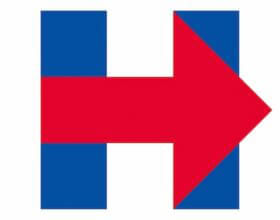
Western Journalism and Mashable  report how Hillary Clinton’s  presidential campaign logo quickly became fodder for critics on social media. Clinton’s political critics, dismayed supporters and graphic designer aficionados panned the logo as amateurish and unprofessional.

These were some of Arc 3’s most interesting reads in digital and public affairs over the last week. What were your favorite stories? Let us know if there is a neat story that we missed! We’d love to hear from you.


Filed Under: Business Advocacy, Campaign Management, Campaigns and Elections, Civic Innovation/Gov. 2.0, Content Marketing, Government, Public Affairs, Social Media Relations Tagged With: Digital and Campaigns and Elections, Digital and Government, Digital and Public Affairs, Digital and Trade Associations, Elections 2016, Hillary Clinton 2016, LinkedIn, Meerkat, Online Video Ads, Social Media and Campaigns and Elections, Social Media and Election 2016, Social Media and Government, Social Media and Public Affairs, Social Media and Trade Associations

Arc 3 Founder Patrick Burns Presents on #SocialGov at SouthWiRED 2014

December 6, 2014 By Patrick L. Burns Leave a Comment

SouthwiredArc 3 Founder Patrick Burns recently received the honor of presenting on #SocialGov at this year’s SouthWiRED conference in Atlanta. Formerly Digital Atlanta, SouthWiRED is one of the Southeast’s largest and longest running digital conferences. Patrick presented on opening day of the conference which included the brightest stars from the digital community sharing their knowledge for the Social Media Track.

Patrick’s presentation “Social Gov: How Local Governments Can Engage Citizens Through Social Media” gave local government PIOs, non-profit and agency marketers examples of the social media platforms most helpful in reaching constituents and provided unique strategies and tactics in using these channels for civic engagement. During his presentation, Patrick provided helpful tips on how Facebook, Twitter, Google Plus, Foursquare, Instagram, Yelp and NextDoor can be utilized by local governments to inform, educate and engage citizens. Patrick also shared with session attendees data on why these social media platforms were important for promoting the involvement of milliennials in civic life.

Session attendees were most interested in utilizing new tools, techniques and tactics such as the employment of Instameets to promote community landmarks, historic buildings and parks and Twitter’s alerts service for local government agencies to inform constituents in an emergency. There was also discussion of the recent availability of the NextDoor platform to local government agencies nationwide for neighborhood specific public safety and emergency alerts.

The energy from the sessions of the SouthWiRED Social Media Track was so enthusiastic that #SouthWiRED14 was able to be the #9 trending topic on Twitter that day. Other rising social media stars from notable companies such as Cox Communications, AirWatch, IHG, Home Depot, and ScoutMob also presented sessions as a part of the social media track.

Are you a local government PIO or elected official and want to learn how social media can promote civic engagement in your community? Please contact Patrick Burns at pburns@rare-light.flywheelsites.com for customized social media training for your local government.

Filed Under: Civic Innovation/Gov. 2.0, Government, Social Media Relations Tagged With: AirWatch, Cox Communications, Facebook and Civic Engagement, Facebook and Local Government, Foursquare and Civic Engagement, Foursquare and Local Government, Google Plus and Civic Engagement, Google Plus and Local Government, Home Depot, IHG, Instagram and Civic Engagement, Instagram and Local Government, NextDoor and Civic Engagement, NextDoor and Local Government, ScoutMob, Social Media and Civic Engagement, Social Media and Local Government, SocialGov, SouthWired, SouthWiRED and Social Media, Twitter and Civic Engagement, Twitter and Local Government, Yelp and Civic Engagement, Yelp and Local Government

Arc 3 to Offer Social Media Training Seminar for Local Government Officials

June 26, 2014 By Patrick L. Burns Leave a Comment

Who is the Social Media Training Seminar for?

The program is designed for municipal and county elected officials, public sector communicators, public information officers (PIOs), City and County Administrators, CIOs and Department Directors.

When and Where Will the Seminar Be Held?

Seminar will be held Friday, July 25, 2014 from 9 a.m. to 4 p.m. at Vinings Bank at 4135 Atlanta Road Smyrna, Ga. 30080. Vinings Bank is conveniently located a few miles north of Interstate I-285 in Smyrna near the west Atlanta and Vinings communities.

What Topics Will Be Covered?

Best practices for social media and local government will be presented. An overview of the major social media platforms in the categories of micro-blogging; social networking; social bookmarking; video and photo sharing; and geo-location will be provided. The social media platforms presented include LinkedIn, Facebook, Twitter, Google Plus, Instagram, Pinterest, YouTube and Foursquare and how they can be utilized for educating and informing constituents and promote citizen engagement. Content tips, timing and tactics will be shared along with an overview of social media management tools. Key operational questions such as what makes a good social media policy; social media measurement and reporting; and social media and crisis communications will also be explored.

What is the Technical Skill Level Required?

A basic understanding of common social media platforms is helpful, but not required. The training seminar will cover an in-depth how-to of each issue or platform covered. Checklists and reference sheets will be provided.

How Do I Participate?

Register online to participate in the one day session by going to our event page. Upon registration, you will receive in-depth information on the agenda. Lunch will also be provided. Participants should bring a laptop computer or tablet for accessing social media platforms. Windows, Android or iOS systems are appropriate. For more information or questions, please contact Patrick Burns at pburns@rare-light.flywheelsites.com or 678.348.6024.


Filed Under: Government

  • « Previous Page
  • 1
  • 2
  • 3
  • 4
  • 5
  • Next Page »

Newsletter

Want to receive the latest news in digital and public affairs? Sign up to receive our updates.

Recent Posts

  • We’re hiring! Director, Government Relations Position in Chicago!
  • Arc 3 Communications Announces New Director of Government Relations, Southwest
  • Arc 3 Communications Celebrates 14-year Business Anniversary
  • Join Our Team! Public Affairs Internship Opportunity in Georgia
  • Why Advocacy at the Local Level is Crucial to Your Association’s Success

About Our Founder

Husband, Father of 5, Founder of Arc 3 Communications - a public affairs agency. Over 30 years in politics and public affairs. Follow me on twitter and instagram at @patricklburns. I live, work and play in the community I grew up in. Read More…

Our Location

We’re located in historic downtown Marietta just off of the Square.

244 Roswell Street SE Suite 300 Marietta, Georgia 30060

Let’s Work Together

How can we help? We’d love to hear about your next  project. Contact us here.


Connect with Us

Want to keep up with the latest public affairs trends? Follow us across our social networks.

  • Facebook
  • LinkedIn
  • Twitter

Copyright © 2026 Arc 3 Communications, LLC